On Being too Fond of Life

bell tower

“It is a pity that saints should be so fond of life as they often are: they ought to be always on good terms with death.” Thomas Boston, Human Nature in its Fourfold State

The quote above comes from Boston’s consideration of the difference between believers and unbelievers in facing death. His basic argument is that unbelievers die in a hopeless state, while Christians in a hopeful one. As a true puritan, he acknowledges at least ten different fears Christians may have in facing death, but in the quote above he returns to the reality that the Christian does not need to fear death, but in some sense should recognize it as his gateway into the eternal presence of God.

Why bring this up? Because it seems to me that the Christian church has, by and large, demonstrated that it is a little too fond of life in this world, and altogether too fearful of death. COVID has brought this fear to the surface, and since March 2020 it has begun to take over the spirit of the church. Now come the mandatory qualifiers. This article is not an indictment against any churches who have adjusted their services in the face of this disease. This article is not a denial that people have died of this dreadful disease or suffered other side-effects besides. This article is not an assertion that all Christians should respond to a difficult issue in the same way. But it is an appeal to the church that it consider what is most important.

I’m not wanting to over-simplify an issue, but it seems the general argument made for suspending in-person worship is that the physical health and safety of the people of the congregation will be preserved in this way. That was the motivation of our Session when we resorted to live-stream only for 5 weeks in early 2020. We wrestled with what COVID was and what impact it would have. However, is it right at this point to continue to make the same argument after a whole year of data?

However, the question is not primarily a pragmatic one. Rather it speaks to the very essence of the reason for existence for the Christian. The delight of the Christian is not found primarily in his physical health or in this life. It is in his reconciliation to God. Sin has separated us from Him, but Christ purchases reconciliation by His own blood. Therefore the Christian does not ever cease to glorify God and enjoy Him. He is joined to Christ. The apostle Paul writes of this union:

“Who shall separate us from the love of Christ? Shall tribulation, or distress, or persecution, or famine, or nakedness, or danger, or sword?” (Romans 8:35)

These are all rhetorical questions. The obvious answer is that no one or nothing can separate you from Christ, His love, and the inheritance that comes with it. But that inheritance is not found in this world, but in heaven. Worship is that foretaste of heaven, and there are a variety of ways in which the Christian will arrive in heaven. Some will be martyred, others will die of natural causes. Some will be gathered into heaven at a young age, others having lived a full life. Some will die subject to horrible suffering, some will pass into glory in their sleep. The point is not that all die and so therefore hand yourself over to a fatalistic recklessness. It is not to forfeit any sense of prudence. Rather, it is “How is it that the church loves life on earth so much that it is willing to forfeit and limit the corporate worship of the saints for close to a year now?”

Some questions to consider in the church’s response to COVID:

  • If the church is not gathering for worship, where is the unbeliever to find the peace offered in the gospel that can give him rest in the face of the constant threat of death? How is he to find Christian fellowship as described in Acts 2:42?
  • If the north American church is faced with persecution sometime in the future, will there be courage among Christians to continue to worship the Lord? And if there are Christians who are willing to assume that risk, should they be permitted to worship or should the elders forbid them and remove the option?
  • The next time a missionary desires to be sent to a dangerous region that is hostile to the gospel, will it be consistent with current COVID policies for the church to let him go and voluntarily face that risk?
  • If the risks for COVID go away, are there other risks, perhaps not as common in the news cycle, that also can cause death (such as highway travel) which would need to be eliminated before the church is willing to re-open? Will we forbid our members from eating fried foods? In other words, if we are doing all we can to remove risk of contracting this disease, shouldn’t we do the same for all other diseases and dangers?

The point is not that all responses to COVID must be uniform. But, to forfeit the worship of the living God based on the data we have (taking the CDC’s data at face value) could easily lead to the conclusion that the saints are a little too fond of life, and are unwilling to risk letting it go. What do you love more? The worship of the Living God or physical life? It’s a serious question. And, as a follow up, if someone were to look at your life today, would they say the same? Whatever our response to COVID may be, let us remember what the chief end of man is: to glorify God and enjoy Him forever.

Obedience is not legalism

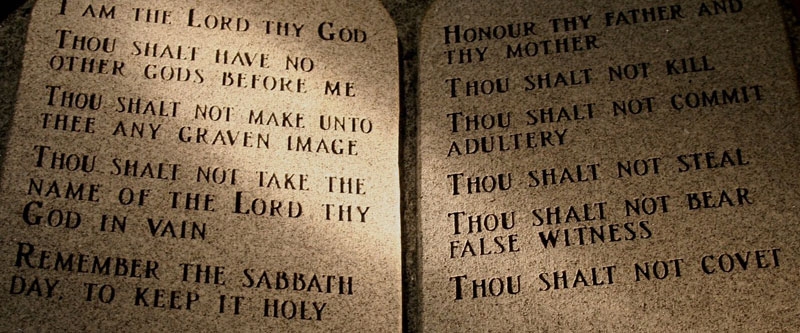
Ten Commandments

“Now it is evident that no one is justified before God by the law, for ‘The righteous shall live by faith.’” (Galatians 3:11, ESV)

“What shall we say then? Are we to continue in sin that grace may abound? By no means! How can we who died to sin still live in it?” (Romans 6:1-2, ESV)

There are few theological conversations that give me more heartburn than those in which the word “legalism” is tossed around with great liberality. Within the context of a discussion on obedience to God’s law, an objector may claim legalism on the part of the one asserting the need for obedience. It is certainly possible that the person calling for obedience is engaged in legalism, but it is not necessarily so. I’m convinced a right understanding of the meaning of this word will keep me from reaching for my bottle of chewy Tums.

Assuming that in the scenario describe above, the word “legalism” is being used to describe meticulous obedience to God’s law, it is important to begin by saying that meticulous obedience is not legalism. Meticulous obedience can be legalism, but it can also be a glorious expression of love to God for the work of Christ on behalf of the sinner. Jesus himself calls for meticulous obedience to the Lord in His Sermon on the Mount: 

“Therefore whoever relaxes one of the least of these commandments and teaches others to do the same will be called least in the kingdom of heaven, but whoever does them and teaches them will be called great in the kingdom of heaven. (Matthew 5:19) 

Even the least of the commandments should not be relaxed, according the Jesus. That principle is seen in action in many places in the Bible. For example, Adam plunges the whole human race into sin and misery by something as simple as eating a piece of fruit. In Num. 15:32-36, a man is stoned to death for the harmless act of collecting sticks on the Sabbath. Why? Because taking these actions was in direct opposition to the explicit commandment and instruction from God. So a narrow assessment of the duties of a law is not sufficient to indicate legalism. Laws and commandments are by definition narrow, also the ones given by the Lord. So what is legalism?

Using the word “legalism” is valid in one of two scenarios. First, it is when something, anything is added to the doctrine of justification by faith. That was the sin of the Galatian Judaizers. Their claim was that you were saved by faith in Jesus plus observance of the ceremonial laws. Derek Thomas has referred to this addition as the “damnable plus.” This distortion of the gospel adds a human element to the innocence of the Christian. Law keeping plays a contributing role in salvation. But as it says in Gal. 3:11 (above), man is not justified in such a way. Christ’s perfect obedience to all of God’s commandments and His righteousness only, are credited to the believer through faith. Anyone who changes that gospel is a legalist and, according to Paul, should be accursed (Gal. 1:8,9).

Second, it is to assert that an application of God’s word that you find particularly helpful is binding on everyone else. In a sense you are elevating your preference to the same status as God’s Law and in so doing practice idolatry. The bedtime for young Gleason children is 7 p.m., rain or shine, and therefore all others must do the same. Or, perhaps a more contemporary example would be around mask wearing. I think wearing masks is a good idea, so therefore everyone must wear a mask. Or I think mask wearing is a bad idea, therefore no one should wear them. Anyone who differs from me in practice is either sinning (worst case) or lacks the wisdom that I have (still not good). That also is the work of the legalist.

To recognize the right use of the word “legalism” helps give the Christian balance in his use of the word. Law keeping, even detailed law keeping, is not an indication of legalism. As Paul says, “For it is not the hearers of the law who are righteous before God, but the doers of the law who will be justified.” (Rom. 2:13). Or James says, “So also faith by itself, if it does not have works, is dead.” The point is not that law keeping makes you righteous. Rather, when you have been made righteous through Christ, you will desire and be careful to keep His commandments. When charges of legalism are flippantly used to silence calls for obedience, God’s authority is denied and the Christian’s expression of love to his Savior is silenced. If a Christian finds keeping God’s specific commandments a burden, then something has gone wrong. In John 14:15 Jesus says, “If you love me you will keep my commandments.” That is not legalism. Legalism is rule keeping with the hope of earning salvation. It is to load a burden on a brother that God never set on him. But if God has given a commandment, it is incumbent on the Christian to obey it totally, carefully, and perfectly. That is not a burden to the redeemed Christian. In fact it is his delight.

Civil Unrest and the Christian

Wednesday at 3:18 p.m. I got a text from my younger brother “Did you see what’s happening in DC?” is all he wrote. We all know what was happening by now. A group of people stormed the Capitol, and we have all seen the videos. I have seen some responses from conservative Trump supporters who view this act as victory, and the violence justified. Ironically, these are often the same people who condemned the riots of the summer instigated by Antifa and/or Black Lives Matter. On the other end of the spectrum there has been outrage and condemnation for the occupation of the Capital. With just as much irony, many of these are the same people who ignored the riots of the summer and made accommodation because the anger of the protestors was somehow understandable.

The gamut of emotions in the world is also reflected among Christians. Some are outraged today, believing the election to be stolen and our republic to be in tatters. If that reflects your view, the denial of the courts to hear Trump’s cases of voter fraud are outrageous to you. Others, I think the majority, is horrified at the pictures of people occupying the very symbol of order and law, although there is a general uneasiness about how America’s politics is being conducted. Regardless of where you land, there seems to be a nervous churning in our nation. It is not my intention to solve those problems (as if I could). If possible, I would even like to conceal my own opinions on all that has transpired. This post is not meant to draw political conclusions, but rather to help the body of Christ to focus on a godly response to our current cultural climate.

Do not let current cultural outrage rob you of your peace in Christ. The Christian can be easily distracted from his main purpose: to glorify God and enjoy Him forever. The Christian is a subject of his heavenly king the Prince of Peace (Isaiah 9:6). It is true that Christ at times lead to division. But the anger and outrage in those moments should belong to the world, not the Christian. In so many places the Christian is called to live at peace with his neighbor (Mark 9:50; John 14:27; 16:33; Acts 10:36; Rom. 1:7; 5:1; 14:17, 19; 15:13; 1 Cor. 14:33; 2 Cor. 13:11; Gal. 5:22; Col. 1:20; 1 Thes. 5:13; 2 Tim. 2:22; Heb. 12:14; James 3:18). 

There may be exceptional circumstances where violence is necessary, such as self-defense or just wars. But the Christian should never delight in it, nor should he choose it if he can avoid it. The Swiss Reformer Pierre Viret has written: “There is nothing which Christians ought to hold in greater horror than the taking up of arms…and that there is nothing in which Christians ought to be more hesitant to engage, nor which agrees less with their profession of faith.” If you are tempted to side with those who occupied the capital, please reflect on the texts above and ask yourself if your heart reflects the call of Scripture.

Do not allow the lies of the world to elevate people of bad character. It is intriguing to me that the people who are outraged over the events of January 6, 2021 had a much different reaction to the events of October 4, 2018. The result of that day was the same, but the cause was different. The former was perpetrated by conservatives. The latter by the Women’s March outraged over the nomination of now supreme court justice Brett Kavanaugh. 

To rush to condemn an action out of political expediency is not praiseworthy. It is a violation of the 9thcommandment. It is the height of naivité to claim innocence in either of our political parties. God is a God of truth, and desires His people to live according to the truth (Ps. 51:6; 86:11; 119:160; Is. 45:19; Jer. 5:3; Zech. 8:16; John 8:32; 14:6; 15:26; 17:17; 1 Cor. 13:6; Eph, 4:15). And when someone makes a truthful statement for a selfish purpose, as a whole he breaks the 9th commandment. 

Neither political party in the USA can claim moral high ground at this point in our nation’s history. And for Democrats to feign outrage over the actions of a few Republican that lasted less than 3 hours seems like a violation of the 9th commandment in light of the summer-long riots of 2020 and their relative silence on those occasions. It is good to condemn violence and destruction, even when done by your political allies. But please do not allow the lies of the world to elevate men of poor character, just because they say true things when it serves them to gain an advantage over their political opponents.

Do not forget about the absolute sovereignty of God. To look at current events apart from God’s on-going governing of all his creation will cause despair. In all of our circumstances, God is exercising control over His creation. Hebrews 12:1-11 explains that control in the context of discipline. The circumstances faced in life can be painful and hard to bear. But the Christian should recognize them as God’s discipline. When God’s chastenings come, the Christian must not resist or fight as the world does. The Christian is called to rejoice and accept God’s work, and respond with peace. Your peace will disappear if you forget that God is good, that He is governing the world, and that political turmoil in the United States is not catching Him by surprise.

This post is not meant to solve all the controversy of our nation’s election debacle. In a sense it seems obvious that God’s judgment has already fallen on this land and we’re simply reaping what we have sown. But more than at any time in an already tumultuous twelve months the Christian must focus on God’s word and get his eyes off his emotions. Peace and stability are only found in by looking to Him. The Christian serves the Prince of Peace and as such his response to the circumstances of the world should reflect that.

Should Christians Vote For Pro-Abortion Candidates?

There is a disturbing political trend emerging among some evangelicals in 2020: support for a Biden/Harris ticket. For one of several examples, Tremper Longman III, a former professor at Westminster Theological Seminary in Philadelphia, has recently encouraged Christians to vote Biden/Harris in 2020.

Without question, the 2020 Democratic Platform is passionately pro-abortion. The DNC platform states, “We believe unequivocally, like the majority of Americans, that every woman should be able to access high-quality reproductive health care services, including safe and legal abortion” (pg. 32).

The Democrats are so zealously committed to the pro-abortion cause that they speak about it as a matter of “justice” and favor the repeal of the Hyde Amendment, which seeks to prevent federal funding (read: your taxpayer dollars) for abortions. Surprisingly, Biden originally supported the Hyde Amendment before the radical leftists convinced him to change his mind—yet another example of how our culture is not merely drifting left but is being driven left, as Al Mohler recently observed in his excellent book, The Gathering Storm: Secularism, Culture, and the Church.

Dislike for Trump appears to be the primary reason for these evangelicals to be losing their minds—and possibly their souls. To be fair, as certain as it is that the Democratic Party has become the Pro-Abortion Party, it’s equally certain that President Trump has an unflattering history of indiscretions. So let me be clear. To maintain, as I do, that Christians shouldn’t vote for pro-abortion candidates isn’t an endorsement of Trump’s character, though I do believe we live in the unfortunate reality of a two-party system, and Christians must consider the most good they can do with their vote. Nevertheless, nothing will change the fact that followers of Christ cannot in good conscience cast a vote for a political platform in direct opposition to God’s moral law. Have we lost our minds?

God’s commandment is clear: “You shall not murder.”

Westminster Assembly’s exposition of the sixth commandment accurately summarizes our duty: “The duties required in the sixth commandment are, all careful studies, and lawful endeavors, to preserve the life of ourselves and others by resisting all thoughts and purposes, subduing all passions, and avoiding all occasions, temptations, and practices which tend to the unjust taking away the life of any; by just defense thereof against violence, patient bearing of the hand of God, quietness of mind, cheerfulness of spirit; a sober use of meat, drink, physic, sleep, labor, and recreations; by charitable thoughts, love, compassion, meekness, gentleness, kindness, peaceable, mild, and courteous speeches and behavior, forbearance, readiness to be reconciled, patient bearing and forgiving of injuries, and requiring good for evil, comforting and succoring the distressed, and protecting and defending the innocent.”

If you cast a vote for Biden/Harris in 2020, you are supporting their promotion of “safe and legal abortions.” That’s a fact. And that’s a fact completely inconsistent with the teachings of our Lord and Savior Jesus Christ. Should any of these things really even need to be said?

Voting for this pro-abortion platform means that you are voting for a lie. Abortions are not “safe.” They are not safe for the women who have them. The psychological damage of murdering your baby is overwhelming. Nor are abortions safe for the little children who have their brains sucked out and are dismembered in the womb. And that’s not to mention the precious babies that survive botched abortions who some Democrats refuse to protect. Consider the Democratic opposition the Born-Alive Abortion Survivor Protection Act. Your hands are full of blood!

This also means you are voting for an unjust law. Isaiah says, “Woe to those who decree iniquitous decrees, and the writers who keep writing oppression” (Isaiah 10:1). The DNC platform’s invocation of the word “justice” with regards to a woman’s right to choose (complete the sentence) to murder her baby is downright sickening. “I look at the faithless with disgust, because they do not keep your commands” (Psalm 119:158). Of course, when you reject God and His Word, you can twist language to suit your agenda because there is no longer any restraint on your God-forsaken heart and mouth other than your own seared conscience.

Instead of asking, Should Christians vote for pro-abortion candidates? perhaps we should be asking, Are Christians who vote for pro-abortion candidates even…Christians? “Everyone who hates his brother is a murderer, and you know that no murderer has eternal life abiding in him” (1 John 3:15).

I’m well aware that many Christians—and certainly many wishy-washy evangelicals—will say that pastors should stay out of politics. “This is an indifferent matter where good Christians disagree.” Honestly, such a perspective is truly astounding given the state of things in our country today.

This isn’t a political issue. It’s an issue of basic Christian morality. God’s true children are opposed to murdering babies. If you support murdering babies, then you are an evil person. If you support a leader who wants to protect the act of murdering babies, you are joining hands with the wicked to do evil. Your disdain for Trump doesn’t justify a vote for the most pro-abortion ticket in the history of this country. If you simply cannot vote for Trump in good conscience, I respect that. Vote for a third party, but, I beg you: don’t cast your vote for those who favor the shedding of innocent blood. It simply isn’t a Christian option.

The Curse of Apathy

“Do not be slothful in zeal, be fervent in spirit, serve the Lord.” –Romans 12:11

Apathy is a deadly spiritual disease. It gradually weakens zeal for God’s glory until there is nothing left but mush. What’s worse, the disease is highly contagious. When it begins in an individual saint, it soon spreads throughout the entire community, weakening the spiritual vitality of God’s elect people. Apathy steals away all concern about ultimate reality. The apathetic person couldn’t care less about what really matters. Eternity is far from his mind.

We must shun all false remedies for the plague! Enthusiasm devoid of doctrine is a false cure. Worked-up emotionalism is of no spiritual and eternal value. Fanaticism is simply the vice on the other extreme of apathy. Zeal without knowledge is a poor substitute for a heart aglow with the Spirit. The true cure for apathy is godly zeal, a needed virtue in today’s church but a rare gem to find.

Is anything more incongruous with Spirit-filled Christianity than apathy? May the Lord deliver us from this malady! Apathetic souls are unmoved by the present crisis, unconvinced of their own sin, unstirred by sound preaching, unimpressed with Christ’s glory, uninterested in God’s Word, and uncaring about lost souls.

An apathetic soul is a dead man walking. As such he is a contradiction in terms. Although having the reputation of being alive, he is dead. It takes a true miracle to reverse the spread of apathy once it has taken root in a congregation. Only the Holy Spirit of God can rouse sleeping saints!

Therefore we must pray for the Holy Spirit and be on guard against all spiritual declension in our lives. Preachers must be willing to blow the trumpet in Zion! They must sound the alarm to the apathetic. Only the most piercing truth will have the desired effect. Without fervent prayer and powerful preaching the church will become a graveyard, and generations to come will wonder why more dramatic measures were not taken to stop the spread of Satan’s lethal pandemic.

Thoughts on glorification

Stephen R. Covey’s book, The 7 Habits of Highly Effective People, is a well-known source of wisdom for those in the world of business. Although the book is mostly self-help and pop psychology, many of the principles are gems from the realm of God’s common grace, truth accessible to believers and unbelievers alike. One of the book’s lessons has always gripped me: Begin with the end in mind. This means that highly effective people are goal-oriented. They know what they want to accomplish, and they tailor everything in life to achieve that goal. Well, this is certainly a biblical concept. We are called by God to live our lives with a teleological mindset. Since God created the world for His glory, life has a goal, an end. Students of the Westminster Shorter Catechism know the goal well. “Man’s chief end is to glorify God and enjoy Him forever.” When it comes to the doctrine of salvation, glorification is the ultimate goal of God’s saving work in our lives. It should astound us that God saved us so that we might be glorified.

            Glorification is the final link in the golden chain of redemption. “And those whom He predestined He also called, and those whom He called He also justified, and those whom He justified He also glorified” (Romans 8:30). God saves His people, effectively bringing all His elect from grace to glory. In context, this glorification is to be fully conformed to the likeness of Jesus Christ (Romans 8:29). Jesus Christ fully reveals the glory of God as the image of the invisible God (Colossians 1:15), and He is the pattern into which God will weave the tapestry of our lives. All other saving benefits (election, calling, regeneration, justification, adoption, sanctification) are aimed at this goal: the glorification of the redeemed sinner. This is where God is taking us.

            When Jesus looked into heaven as our great High Priest and prayed for all His people, he said, “Father, I desire that they also, whom You have given me, may be with me where I am, to see my glory that You have given me because You loved me before the foundation of the world” (John 17:24). How we need to grasp the sublime joy of Christ’s prayer for us! The Father and Son enjoyed a loving fellowship in eternity past. God the Son beheld the glory of His Father in perfect beatific vision. There wasn’t the slightest break in the integrity of that divine fellowship. And yet Jesus prays that we might share in that glorious fellowship and vision. Glorification entails being with Jesus where He was before the foundation of the world. It means that we share in the fellowship of the Trinity, basking in the glory of the great salvation Christ won for us at the cross.

            Again, this glorification is the goal of Christ’s saving work. “But we see Him who for a little while was made lower than the angels, namely Jesus, crowned with glory and honor because of the suffering of death, so that by the grace of God He might taste death for everyone. For it was fitting that He, for Whom and by Whom all things exist, in bringing many sons to glory, should make the founder of their salvation perfect through suffering “ (Hebrews 2:9-10). If we ask, “Why did Jesus come from heaven to earth, become a little lower than angels, and suffer on the cross?” The answer is ready: “to bring many sons to glory.”

            Like election, calling, regeneration, justification, adoption, and sanctification, glorification is the result of the free grace of God. When we arrive in heaven and are “saved to sin no more,” we will praise God for His grace to all eternity. Not one beam of our glorified state with shine from man’s merit. It is a reflected glory. God is like the sun, and we are moons. All the glory comes from Him and goes to Him. Our glorification is not the result of man’s cooperation. If it was, man would have grounds for boasting. However, we shall be glorified by free grace “so that in the coming ages He might show the immeasurable riches of His grace in kindness towards us in Jesus Christ” (Ephesians 2:7). It will take an eternity of ages to exhaust the inexhaustible grace of God! “When we’ve been there ten thousand years, bright shining as the sun, we’ve no less days to sing God’s praise than when we’ve first begun.” When Jesus returns and our glorification is complete, it shall only be on account of the fact that He comes with grace. This is why we are told to set our hope fully on the grace that will be brought to us at His Second Coming (1 Peter 1:13).

            Glorification comes in two stages. Taking our cue from the Westminster Shorter Catechism, we understand that we receive certain benefits at death and others at the resurrection.

“What benefits do believers receive from Christ at death? The souls of believers are at their death made perfect in holiness, and do immediately pass into glory; and their bodies, being still united to Christ, do rest in their graves, till the resurrection” (Shorter Catechism, Q. 37).

The first stage of our glorification is the glorification of our soul immediately upon death. When the believer dies, he instantaneously passes to the realm of the “spirit of the righteous made perfect” (Hebrews 12:23). Sanctification is now complete. Sin is gone. Holiness has ripened into perfection. We must stress the fact that this happens immediately upon death. There is no layover in purgatory. Jesus told the thief on the cross, “Today you will be with Me in Paradise” (Luke 23:43). Elsewhere Paul makes it clear that to be absent from the body is to be present with the Lord (2 Corinthians 5:6, 8). The Scriptures tell us very little about this intermediate state (the state of the soul after death but before the resurrection). However, we can be sure that it is “far better” (Philippians 1:23) because we are with Christ.

Years ago my wife and I went to visit her brother and his family in Bucks County, Pennsylvania. While we were there, I insisted that we take a trip to Princeton Cemetery in Princeton, New Jersey. I wanted to see Jonathan Edwards’ grave. Well, not far from where I found Edwards’ grave was the resting place of Charles Hodge (1797-1878), the great Calvinistic theologian of old Princeton. And the inscription on his tombstone: “To be absent from the body is to be present with the Lord.”

But the benefits of glorification are not complete at death. There is more. . .

“What benefits do believers receive from Christ at the resurrection? At the resurrection, believers, being raised up in glory, shall be openly acknowledged and acquitted in the day of judgment, and made perfectly blessed in the full enjoying of God to all eternity” (Shorter Catechism 38).

God’s saving work in our lives is holistic. God redeems us body and soul. Although the Fall brought mankind into an estate of sin and misery, God’s grace restores nature. Salvation is re-creation; God makes all things new (Revelation 21:5). This means that the perfection of soul that happens immediately upon death doesn’t bring the work of salvation to an end. God desires to restore our bodies and vindicate our persons at our public acquittal at the Day of Judgment. This is when “the righteous will shine like the sun in the kingdom of their Father” (Matthew 12:43).

The glorification of soul happens immediately at death; the glorification of our bodies happens at the return of Christ and general resurrection. “For since we believe that Jesus died and rose again, even so, through Jesus, God will bring with Him those who have fallen asleep. For this we declare to you by a word from the Lord, that we who are alive, who are left until the coming of the Lord, will not precede those who have fallen asleep. For the Lord Himself will descend from heaven with a cry of command, with the voice of an archangel, and with the sound of the trumpet of God. And the dead in Christ will rise first. Then we who are alive, who are left will be caught up together with them in the clouds to meet the Lord in the air, and so we will always be with the Lord” (1 Thessalonians 4:14-17). This passage makes clear that when Jesus returns, He will raise the dead. Those believers who are alive when He returns will be instantaneously changed. This change is described as occurring “in a moment, in the twinkling of an eye, at the last trumpet” (1 Corinthians 15:52). Here the perishable puts on imperishable and the mortal, immortality (1 Corinthians 15:53).

The nature of this resurrection body is the subject of large chunk of 1 Corinthians 15 and is a topic large enough to be covered in a separate study. Suffice it to say, though, that this resurrection body is a real physical body. Paul does indeed refer to it as a “spiritual body” in 1 Corinthians 15:44, but Paul doesn’t use the word “spiritual” to mean non-physical. Instead, it means permeated by the presence of the Holy Spirit. Our resurrection bodies will be free from sin and all the effects of sin. Our resurrection bodies will be incapable of sin, sickness, disease, aches, pains, and death.

In terms of glorification, we will be part of the show when Christ reveals His glory on the last day. “When Christ who is your life appears, then you also will appear with Him in glory” (Colossians 3:4). Our glorification is not inherent. At the same time, we shall share in the glory of Christ by way of reflection. We shall appear glorious only in Him. Like all the other saving benefits, our glorification is through our union and communion with the Lord Jesus. The Apostle of love tells us that “when He appears we shall be like Him because we shall see Him as He is” (1 John 3:2). The Second Coming in conjunction with the Beatific Vision instantaneously transforms all the elect of God. And this hope of glorification is an incentive to holy living for John continues: “And everyone who thus hopes in Him purifies himself as He is pure” (1 John 3:3). We should daily live, then, with an awareness of our blessed future. “Our citizenship is in heaven, and from it we await a Savior, the Lord Jesus Christ, who will transform our lowly body to be like His glorious body, by the power that enables Him even to subject all things to Himself (Philippians 3:20-21).

            Since glorification is God’s work, it’s a sure work. The power that enables Him to subject all things to Himself is the same power that He will utilize to save us completely from sin and sin’s effects. He shall not fail to bring us from grace to glory. “And I am sure of this, that He who began a good work in you will bring it to completion at the day of Jesus Christ” (Philippians 1:6). Let us never forget that God began the work, and God shall complete the work. He finishes all His projects. He never fails to accomplish any of His purposes. And this is greatest of all God’s purposes. It is, to borrow a line from Jonathan Edwards, “the end for which God created the world.” This is goal of the entire created universe. It is why the whole creation is groaning for the revealing of the sons of God (Romans 8:19, 22). God is seeking to glorify Himself by saving a people for Himself, and He shall bring that people from grace to glory. SDG


Why the Church Must Meet

Ten Commandments

Throughout the COVID crisis, the church has faced pressures from without and within. From without there has been an unfair restriction placed on the church. As has been seen in Nevada, casinos and the gambling industry have been granted greater leniency than churches, and the Supreme Court of the United States upheld Nevada’s law with a 5-4 decision. And that is just one example. Others, such as liquor stores, home improvement stores, and grocery stores, continue servicing their clientele, having been deemed necessities, while the church has been denied that status. The church has largely acquiesced to the executive orders of the civil magistrate based on the Biblical injunction to honor the civil magistrate and to extend love to our fellow man by protecting them from COVID. And yet, is the prevailing wisdom truly the best way to honor God and love our neighbor?

Especially at the beginning of the COVID scare back in March and April, many churches were willing to temporarily suspend in-person worship, opting for live-streamed services instead. The nation, and the world really, wrestled to understand what COVID was. Over time, as information has been gathered, and the “curve” seemed to flatten, doors were cautiously re-opened. Some members still have stayed away from in-person worship. But is it really wise and God-honoring to neglect gathering together to worship of the Lord?

The foundation of my concern rests on the first commandment: “You shall have no other gods before me.” (Exodus 20:3). Here God claims the preeminent place in the hearts of His people. That unique place is reinforced in the summaries of the 10 commandments given in the gospels: “You shall love the Lord your God with all your heart and with all your soul and with all your mind. This is the great and first commandment. And a second is like it: You shall love your neighbor as yourself.” (Matthew 22:37-39). Currently the church has focused on the commandments that help it love its neighbor, at the expense of the commandments that direct it to love God.

The church is failing to examine the Scriptures to see if the church is ever described as forfeiting gathering there. Perhaps there are examples in Scripture where the church ceased meeting to avoid a particular danger. COVID is not the only danger in the world. Surely there must be some instance where the New Testament church closed its doors. An examination of Acts shows this did not happen even when the church was under a danger far graver than COVID-19.

Perhaps the most pressing danger facing the apostolic church at its formation was persecution. The church was small, and people were being killed for their profession of faith in Christ. And yet Scripture testifies that persecution did not have the intended effect of suppressing the worship of God’s people.

  • In John 20:19, even though the disciples were afraid of the Jews, they were still gathering.
  • In Acts 4:31, after Peter and John were released from being arrested for preaching the gospel, they “went to their friends.” (v. 23), who were all “gathered together.”
  • In Acts 8:4, after the disciples are scattered because of the death of Stephen and subsequent persecution, they continue to preach the word of God wherever they go. There is an identifiable group that forms in Samaria, to which the apostles send Peter and John (Act 8:15).
  • In Acts 12:12, Peter’s arrest and subsequent unjust imprisonment prompts the church to “gather together” to pray for him.

In other words, even the danger of persecution does not cause the early church to forfeit meeting together. That is because the worship of God is paramount. It should supersede all other earthly activity, because it is the one activity that anticipates heaven. When a church, or members of a church, do not meet together to avoid COVID, a statement is made. Implicitly or explicitly the church, or a part of it, is saying that it is more important to avoid contracting COVID than it is to worship the Lord. And yet in Hebrews 10:24-25, it is the gathering of the saints that is seen as essential to the sanctification of the believer, and not to be neglected: “And let us consider how to stir up one another to love and good works, not neglecting to meet together, as is the habit of some, but encouraging one another, and all the more as you see the Day drawing near.”

I will say it as strongly as this. When the church forsakes worship for a disease like COVID, it is showing love for self, not for God. It is recreating God in its own image, preferring the temporary physical health that isolating may provide, to the praise of the God who made and redeemed His people. This is not saying anything about modified worship, worship out of doors, the use of masks in worship. I have opinions about all those things, but they are not the focus of what is being said here. The point today is that Christians are not loving God by staying away from church because He commands the assembly of His people, and to show love for God is to walk according to His commandments (John 14:15, 1 John 5:3, 2 John 6). God must be loved more that anything in this life. But there is a second principle that flows from this central point.

One of the reasons given for suspending in-person worship is that the church must love its neighbor. However, right now the world is constantly coming face-to-face with death, the very reminder of the coming judgment. They are constantly being told that their death is just around the corner and it is terrifying the world. And yet when the church ceases to meet, these hopeless and lost souls have only the equivalent of a TV show to sustain and comfort them. No doubt they may hear truth, but they will not experience it in the context that God designed: a living, communing body of believers. It is neither loving, nor caring to close the doors of the very place where hope in times of panic can be found, where fellowship can be experience, and where the splendor of heaven is anticipated each Lord’s Day.

My dear friends, the church must consider carefully what it does today. Its actions are making a statement. The next generation of the church is watching the decisions of today. And they are seeing a church that prefers temporary, physical health over the worship of the Lord. And they are learning. The church is folding on an issue that does not pose a significant risk. And if it folds today, what will it do when a real crisis comes along.

In my county, there are 202,403 people. In this county, there has definitely been an increase of reported cases in recent weeks. As of today (August 3, 2020), the total number of people infected with COVID as reported by the Georgia Department of Public Health is 3,719, of which 1,485 (40%) were diagnosed in the last 2 weeks. And yet the number of deaths remains relatively low at 83. The church has to consider the math. A Richmond County resident has a 1.84% chance of contracting COVID. That means 98 out of 100 people will never get this disease. Even more staggering, only 4 out of 10,000 will die of this disease. That means a Richmond County resident has a 99.96% chance of living through COVID. That is not to minimize the tragedy of death, but rather to show just how low the risk is. The risk of dying from COVID is lower that many elective surgeries! 

The church of Christ has been purchased for worship. It has been set apart to worship the Lord. And it is never free to cease to be what it was created by God to be: the body of Christ established on earth to sanctify the saints and call sinners to repentance. To change or deny that work is to have other gods before the Lord.

COVID and the Church

There is no shortage of opinions about how to respond to COVID-19. The debate that encapsulates just how polarizing this issue can be is the one surrounding the use of masks. Basically, there are two camps. Some think that all should be mandated to wear masks in an effort to halt the spread of the virus. Others think that the wearing of masks should be left to the individual because the virus will make its way through the population anyway. This article will not definitively solve this issue for you. The purpose of this article is to protect the unity of the church. COVID-19 will be a distant memory one day, and Christians will find themselves worshiping with that person with whom they disagree with so vehemently today. 

Amazingly, though positions on masks may be different, the sins by their proponents are often the same. First,Christians have not been careful to preserve the truth. It is asserted that those who do not wear masks are not loving their neighbors, or that those who are wearing masks are being fearful. These claims may be true, but most likely they are not. Each position is argued citing scientific studies to reinforce the position. Appeals are made to doctors, scientists, and government policies to bolster the preferred perspective. And none of those things make it clear that the motivation of our fellow man is lack of love or sinful fear. Rather than making statements that are likely not true, it is the joyful duty of the Christian to restrict his statements to things that are known to be true.

Consider the claim is that those not wearing masks are not loving their neighbors. The presence or absence of risk is not an indicator of the presence or absence of love. Our lives are filled with risk. I heard the other day of a 39 year-old mother who fell out of a golf cart while carrying a her baby. In an effort to protect the child, she did not brace herself and died as a result of her fall. Was it unloving of the driver to allow the woman to get into the cart knowing there is risk involved? Certainly not. To assert risk equals lack of love is simply not true and demonizes a Christian brother or sister with perfectly loving intentions. To equate the introduction of risk with lack of love is neither fair nor accurate. And we are charged as Christians to promote the truth in the ninth commandment (Exodus 20:16). 

The claim that those who wear masks are fearful. It is one thing to decide not to wear a mask. It is quite another to assert that those wearing a mask are motivated by fear. There are many reasons people may decide to wear a mask in response to COVID. It is not different than other areas of life. People watch their diet and exercise to promote good health. They wear seatbelts when driving. Smoke detectors are installed in homes. None of these are necessarily acts of fear. They are most often just attempts to be prudent. To assert wearing a mask equals fear is simply not true. And we are charged as Christians to promote the truth in the ninth commandment (Exodus 20:16).

Second, Christians have (again) proved themselves prone to pride. In the lack of charity on display between people, also believers, it is clear people have an unhealthy opinion of their own conclusions. The vast majority of folks are far from qualified to make a definitive statement of the benefits or draw-backs of wearing a mask. 99+% of people are just trying to make the best decision they can with their limited understanding. In Ephesians 4:2, Paul urges the Ephesian church to “walk in a manner worthy of the calling to which you have been called, with all humility and gentleness, with patience, bearing with one another in love, eager to maintain the unity of the Spirit in the bond of peace.” People are not “sheeple” if they wear a mask. They are not simple-minded dolts if they do not.

After COVID is over (and that will happen), churches everywhere will return to regular corporate worship. My plea today is that the church behave in such a way as to make that return easy, and free from bitterness and party-spirit. There is an oft-quoted phrase from church history that can and should be applied to the current situation: “In essentials unity, in non-essentials liberty, in all things charity.” Masks are not the indicator of orthodoxy. Be charitable to your fellow-Christian. “Be kind to one another, tenderhearted, forgiving one another, as God in Christ forgave you.” (Ephesians 4:32).

The Church and Culture

Conflict

The church’s relationship to the culture is a tenuous one. Especially in these tumultuous times of COVID-19, quarantine protests, and Black Lives Matter, the church must use discernment regarding its relationship to the ideas put forward and accepted within its culture. Culture is defined by google as: “the customs, arts, social institutions, and achievements of a particular nation, people, or other social group.” That seems a fair definition. So how does the church interact with those customs, arts, institutions, and achievements?

The answer to that question will, of course, depend on the level of faithfulness to God’s word the culture displays. A society whose culture is righteous will require little oppostion from the church, but one whose foundation is the philosophy of man will frequently bump heads with the church. What today’s culture needs is not the affirmation of the church, but rather her calls for repentance.

The church seems to have lost its prophetic voice. Of course, that is not true of all churches. There are many faithful churches that boldly proclaim God’s word. But it seems to me there are more that are simply mimicking the words of the culture, and pushing the word of God aside. And therein is the problem. The authority of Scripture, based in the Lord who gives it, makes adherence to the teaching of the Bible the distinguishing mark of the Christian. And if culture is doing anything contrary to God’s word, it is neither safe nor wise for the church to adopt or associate with that thing. There must always be an obvious identity in the Christian: an identity defined by his relationship with Christ as defined in the Bible.

Today the more popular cultural voices are in opposition to God’s word. For example, the Black Lives Matter movement enjoys tremendous popularity, also within the church. And yet it stands diametrically opposed to the Lord. Its website proudly proclaims: “We affirm the lives of Black queer and trans folks, disabled folks, undocumented folks, folks with records, women, and all Black lives along the gender spectrum. Our network centers those who have been marginalized within Black liberation movements.” However, the seventh commandment forbids homosexuality, transgenderism, and gender confusion. It is an attack on the very character of God the Creator and defined as sin. Or in another place it states: “We disrupt the Western-prescribed nuclear family structure requirement by supporting each other as extended families and ‘villages’ that collectively care for one another, especially our children, to the degree that mothers, parents, and children are comfortable.” But God charges parents to train up their children in the fear of His great name (Eph. 6:4). So there is irreconcilable divergence at the foundation of the Christian faith and the organization Black Lives Matter. The former flows from the Bible, the latter is foundationally opposed to Scripture.

Christian, how will people identify you? If someone does not know you, will they quickly discern that you are Christian from your social media posts, by your choice of words, by the decisions you make throughout the week? The reality is, the Christian cannot take on itself an identity that is partially rooted in the world. Consider these verses from the New Testament. Paul says, “Now we have received not the spirit of the world, but the Spirit who is from God, that we might understand the things freely given us by God.” (1 Corinthians 2:12, ESV). In another place the apostle says, “See to it that no one takes you captive by philosophy and empty deceit, according to human tradition, according to the elemental spirits of the world, and not according to Christ.” And in yet another instance the apostle John states: “They are from the world; therefore they speak from the world, and the world listens to them.” (1 John 4:5). The point of those verses is all the same. The world does not have the same voice as the church, and the church should not copy it.

It is important to remember that very basic truth especially in our days. The Christian church must stand on the Bible if it is to maintain its witness at all. The world will not be content until the bride of Christ has become an adulterous wife. But I am afraid that in North America she is already well on her way.

Is Privilege a Sin?

Probably like all of you, I have been trying to process through the recent events in our society. First there was all the upheaval because of COVID-19, and then all the civic unrest surrounding the death of George Floyd. People have reacted in different ways, some good, some evil. One thing that I have been considering in this spectrum of response is the apologies that are being made for privilege these days. To give the most gracious response to those who are doing so, I assume their intentions are good, but is apologizing for privilege, specifically white privilege, actually glorifying to God.

I want to state up front that I do not accept the blanket notion of white privilege as it is articulated today. Even on just an anecdotal level, to ascribe blanket privilege to one ethnic group seems to hopelessly over-simplify the complexities of a society made up of millions of intertwined lives. I am a middle-class white man. I am very sure that I have access to privileges that many, many millions of people of a variety of ethnic origins in our society do not enjoy. But there is also another side. I am also very sure that I do not have access to privileges that many millions of people enjoy. Many white, Asian, black, and Hispanic people have access to privileges that I do not.

Anecdotally I have experienced this myself. As a young man, I applied to teacher’s college when pursuing undergraduate studies. While applying for entry into the program, I was required to fill out forms (of course). On the cover page it stated explicitly that visible minorities and females would be given preferential treatment. In that program, I could be counted as being under-privileged. Minorities and women applied from a position of privilege. Again, this observation does not deny that there may be privileges I enjoy in another setting. I am simply making the point that to make a blanket statement on privilege of one ethnic group seems hopelessly over-simplified on its face. However, apologizing for privilege strikes me as problematic for a more significant reason: it is asking forgiveness for something God has not called a sin.

When I hear white Christians apologizing for their privilege, I want to ask them, “For which sin are you apologizing and seeking forgiveness?” Certainly, the Bible condemns showing favoritism (Jam. 2:1-7) and racism (Gal. 3:28), but privilege is not the same thing, and is not in and of itself sinful. In fact, God gives His people the fifth commandment to guide them in their various relationships, some in which they are privileged, and others not. The Westminster Shorter Catechism states, 

“The fifth commandment requireth the preserving the honor, and performing the duties, belonging to everyone in their several places and relations, as superiors, inferiors, or equals.” (Westminster Shorter Catechism #64). 

Sometimes people are in charge and enjoy certain privileges because of their position. Other times they are peers where the same rights are shared. More often than not, they report to others, living under their authority being deprived of privilege others have. In all of them, it is imperative to occupy those roles with dignity, respecting each other as made in the image of God. But it is also important to recognize God has not described these relationships as sinful by default. To apologize for having a privilege is to call sin what God has not called so.

As I’ve said, there are common-sense difficulties with the idea of blanket white privilege, so I want to leave that term aside. However, dealing generically with privilege, there is no doubt there are gradations of privilege in society. Privilege is morally neutral. Privilege can be held in a sinful way, or can be used to give God glory. Privilege in and of itself is not sin. To ask forgiveness for having it is contrary to the Bible which recognizes God’s providence, and His right to distribute His possessions and gifts throughout the world according to His own will. When these are used unjustly, the church should bring correction to her members. But when used for the glory of God, there is no cause to apologize, no matter which ethnic group you belong to. Within the church we are all God’s children, the body of Christ, and we are to work together in our different places and stations to give Him glory together. That is not the cause for division, but for praise.