Category Archives: 10 Commandments

Christian Nationalism and the Local Church | An Introduction

At the 52nd General Assembly of the Presbyterian Church in America (PCA), this denomination, showing solidarity with the Associated Reformed Presbyterians (ARP) and the Reformed Presbyterian Church in North America (RPCNA), adopted a simple statement. The Assembly declared:

That the 52nd General Assembly of the Presbyterian Church in America does hereby join with the Associate Reformed Presbyterian Church (221st General Synod) and with the Reformed Presbyterian Church in North America (193rd Synod) in condemning without distinction any theological or political teaching which posits a superiority of race or ethnic identity born of immutable human characteristics, and does call to repentance any who would promote or associate themselves with such teaching, either by commission or omission.[1]

This statement was part of a larger concern that was brought before the Assembly. The Assembly also voted 1008-333 to approve the establishment of a study committee to investigate “the relationship between Christian Nationalism, Ethno-Nationalism, and related teachings. Further, the committee shall advise on whether these teachings and formulations are in conformity with the system of doctrine taught in the Westminster Standards or where they may diverge from the system of doctrine on Christian Nationalism.”[2] Those requesting such action pled for the General Assembly to act because of actions and attitudes with which they were dealing in their church, arising from “Christian Nationalism.”

Before thinking through what Christian Nationalism is, some may be wondering why it is necessary to write about it. I have been aware of its existence since around 2023. At the time it simply seemed like a niche argument among political theory and theology nerds. I was sure it would disappear soon. However, that has not happened. The debate around Christian Nationalism is hardly mainstream, but it has the potential of becoming so. Pastorally, then, it is my aim to provide a very basic introduction to the subject considering four basic groups coming to Christian Nationalism:

  1. Those who are unaware of Christian Nationalism. The broadest definition possible will be given to provide a basic understanding of the movement;
  2. Those who are immediately suspicious of any combination of “Christian” and “nation.” The Reformed theological tradition of the use of God’s moral law will be summarized, showing there is agreement within the Reformed theological tradition at least as to some of what is articulated in Christian Nationalism;
  3. Those who are overly confident about what Christian Nationalism can do. The need for a healthy dose of realism will be laid out as seen in the variety of opinions about how to establish Christian Nationalism in society;
  4. Those who go beyond Christian Nationalism to Ethno-Nationalism. There will be a rebuke and critique of the unsavory and sinful elements included in Christian Nationalism. As a caveat, Christian Nationalism is not club with a gatekeeper who decides who is in and who is out. Not all who claim to be Christian Nationalists hold to these excessive views. And yet those who do should be addressed.

This post is the first in a longer series which recognizes all these different “camps” in the Church, and is meant to give an introductory survey of this movement. For some it will introduce the subject as a whole, for others it will urge caution about being overly dismissive or optimistic, and for some it will serve as a rebuke for bring division and error into the Church. So with all of that said, what is Christian Nationalism? Below is a very general overview.

Christian Nationalism

One of the challenges in addressing Christian Nationalism is that there is a breadth of opinions held by proponents of this position. Not all men who claim the name “Christian Nationalist” hold the same opinions. Of course there are a variety of definitions that are used to define this political theory. It is most helpful to try to clarify terms using the words of men who themselves hold the position, rather than the various straw men that have been suggestion by their opponents. James Silverman and Dusty Deevers, in the Statement on Christian Nationalism and the Gospel define it as follows:

CHRISTIAN NATIONALISM is a set of governing principles rooted in Scripture’s teaching that Christ rules as supreme Lord and King of all creation, who has ordained civil magistrates with delegated authority to be under Him, over the people, to order their ordained jurisdiction by punishing evil and promoting good for His own glory and the common good of the nation.[3]

Contained in this definition is a recognition that the civil magistrate is subordinate to Christ and instituted for His glory. Another definition comes from Stephen Wolfe who says,

Christian nationalism is a totality of national action, consisting of civil laws and social customs, conducted by a Christian nation as a Christian nation, in order to procure for itself both earthly and heavenly good in Christ.[4]

This definition focuses more on the action of the magistrate as aimed at directing the nation toward Christ, and deals less with the initial source of its authority. Christian Nationalism, in my mind, is a very basic outlook on the way civil government and Christianity should interact. Using these two definitions, and articulating the very basic foundation of this philosophy in a way its proponents would recognize, its approach to this relationship would be that the government is accountable to God, and more than that, should order itself in such a way that Christianity is encouraged and supported in the laws and structures of the nation. Such a philosophy is actually fairly tame and easily traced as a common view in Reformed theology. A simple reading chapter 23, “Of the Civil Magistrate” of the original Westminster Confession of Faith of 1647 would make that abundantly clear. And yet this movement has generated a tremendous amount of controversy.

Some of that controversy is about the political views themselves. Even at the confessional level, the American Presbyterians significantly revised the original Westminster Confession of Faith in 1788 precisely on the issue of the function of the civil magistrate, curbing its involvement in the life of the church. And yet, even in the revisions the assumptions that nations should be Christian remains and that Christian denominations should be preserved in part by the magistrate. “As nursing fathers, it is the duty of civil magistrates to protect the church of our common Lord, without giving the preference to any denomination of Christians above the rest, in such a manner that all ecclesiastical persons whatever shall enjoy the full, free, and unquestioned liberty of discharging every part of their sacred functions, without violence or danger.”[5] This quote is simply given to show that the definitions above are not that far away from even the revised statements of the Westminster Confession. And yet, Christian Nationalism is seen by many as controversial.

Controversy is, in itself, not an indicator of error. It is my view that Christian Nationalism as a broad philosophy is not problematic. The controversy arises not from its essential statements, but from how its proponents suggest this basic philosophy should work itself out in real time. Because of the disputes around these things it is a proper pastoral question to ask: How should Christians interact with this controversial movement? Should it be rejected outright? Are there parts of Christian Nationalism that can properly inform Christians in their approach to life in the society? Are there limits to what should be embraced in terms of its ideas? These are questions that represent the various ways people react to this new phenomenon. To address these different views, perhaps a golf-course analogy works. There are aspects of Christian Nationalism that are like shots hit on the fairway which is where the ball should be, others which are like those hit in the rough where strokes and blood pressure increase, and still others that act splash into a water hazard where the ball is lost entirely.

In the series of articles that follows each category is to be examined so the Christian who first hears about this movement will have a foundation to begin interacting with it. In a world of polarized opinions, where all is either good or bad, these articles will hopefully present things to learn, things that are seen as controversial, things that are clearly wrong and suggest some ways forward in navigating this controversy.


Pastor Geoff Gleason
Cliffwood Presbyterian Church

—————

[1] Presbyterian Church in America, 52nd General Assembly Commissioner Handbook, Onsite Addition Partial Report of the Overtures Committee, p. 224-225.

[2] Onsite Addition Partial Report of the Overtures Committee, p. 224.

[3] James Silberman and Dusty Deevers (with contributing editors William Wolfe, Joel Webbon, Jeff Wright, and Cory Anderson), The Statement on Christian Nationalism & the Gospel, accessed January 20, 2026, https://www.statementonchristiannationalism.com

[4] Stephen Wolfe, The Case for Christian Nationalism, (Moscow, Idaho: Canon Press, 2022), 9.

[5] Westminster Confession of Faith, Chapter 23.3.

Practical Helps for Honoring the Lord’s Day in Family

We live in a time when the idea of Sabbath rest is almost entirely disregarded. That is certainly true “out there” in the big bad world. Shopping malls, restaurants, and sporting venues have some of their busiest days on the day that should be reserved for the Lord. At this point, the very notion of commerce ceasing for one day of the week is completely foreign. But it will be of the great benefit of the church to stand against this cultural trend and reclaim this great blessing instituted by God.

From creation, the Lord of glory has set apart one day in seven that His creatures might rejoice worship. I have written in other places about the biblical establishment of the Lord’s Day. This article aims at something different: to encourage and help those Christians who are seeking to honor the Lord and His Day.

North American society no longer provides any aids to this end, which is a fairly recent change in the overall scope of history. I spent twenty-four years of my life living in Canada (1985-2009). In my experience it is, in many ways, a more secular and progressive nation than the United States. But I remember driving by the shopping malls when my family moved there in 1985. The parking lots were empty and the stores were closed on Sunday. Social pressure was exerted on businesses in the form of fines to give one day of rest. The desire to worship the Lord on this one day was long gone, but there was still societal support for those who desired to rest and enjoy God’s blessing. That societal protection is now long gone, both in Canada and the United States. It has been replaced with stores who will not hire people who do not have availability on Sunday, all major sports holding their major championship matches on the Lord’s Day, and a general sense of befuddlement as to why anyone would want to forfeit time for recreation and business for something as quaint as going to church.

Even in churches there is even less and less support for preserving the Lord’s Day. This article is aimed at those within the Church who desire to arrest this slide, beginning in their own homes. The first aim is to outline what must be avoided, and the second is to give ideas for what can be done to promote a joyful Lord’s Day celebration in the church for the good of God’s people.

Things to Be Avoided

The basic call of the Sabbath is to set aside person secular employment and free others for their labor (Exodus 20:8-11). There is an additional expectation that the Sabbath be kept with a spirit of delight in the Lord (Isaiah 58:13-14). But there are certain things that should be avoided because they “grease the wheels” for the temptation to forsake the Lord’s Day.

Making Keeping the Lord’s Day Optional

Habits are often associated with a cold, disinterested hypocrisy. However, the consistency that comes with a habit is really just the internal structure that allows people to pursue the things that are important to them. An example from every day life is weight loss. How many diets provide promises of transformation change only to fail because the habits of the dieter have not been changed? Too many “cheat days” undermine any kind of meaningful progress, or when goals have been achieved the draw of unhealthy foods erase what has been gained. To be at a healthy weight remains the goal, but the inconsistencies make it difficult to achieve it in any meaningful way. So it is with the Lord’s Day.

One of the central distinguishing marks of the Lord’s Day is the call to gather with other Christians in worship. Lack of consistency often undermines that central tenet. A particular circumstance convinces the Christian that just this once it is good to work, stay home from church, or in some other way ignore the fourth commandment. Perhaps there is a pressing deadline or a promising new client who needs something done right away. Perhaps family has come into town for a weekend visit. There are many reasons that can be given for a spiritual “cheat day.” And yet to indulge them is to cut our own feet out from under us. There are works of necessity and mercy that can and should be performed on the Lord’s Day. However, most excuses do not rise to that level. And by making the Lord’s Day optional by neglecting worship for one excuse is to make it easier for excuses to multiply.

Speaking Ill of the Lord’s Day

In families, speech plays an important part in how family members view this day. The way a father speaks about Sunday will shape the way his children think of it. If he complains about the things he does not get to do because of the Lord’s Day, children will be predisposed to think of the Sabbath as an obstruction rather than a blessing. It is right instead to speak of the Lord’s Day as time given to pursue what is out of reach on the other six days due to other responsibilities. It is a day of works of piety where the soul is built up and prepared for what is demanded of the Christian from Monday to Saturday.

If there are complaints of the heart, do nto give them voice. Ask that God would change you so you would delight in the Lord’s Day. Bring your heart in submission to the command of Scripture that you might rejoice in the blessings of worship, physical rest, and heavenly anticipation. Your words will follow suit.

Making the Lord’s Day a Drudgery

The activities of the Lord’s Day should match the words used to describe it. It can be repeated a thousand times that the Lord’s Day is a blessing, but if experience doesn’t match those words those statements will be rejected as false. Do not give occasion for the devil to whisper to your family that the Lord’s Day is not a blessing, but a bore. That is not the same thing as saying that the whims of the human heart must be satisfied for the sake of a positive outlook on the Sabbath. It is saying that for the Christian the Sabbath is to be a delight, and that should be matched in the joyful activities of this day. Rather than a day focused on prohibitions, it should be a day where there are special joys. Do not make it hard for young ones to see that this day is wonderful.

Things to Be Done

There are plenty of other cautions over what not to do, however there should also be consideration of positive activities that can protect this day and the blessing it brings.

Live for the Lord the other Six Days

Hypocrisy is the great turn-off for those who have to live under it. Parental influence regarding the Lord’s Day can be obliterated by hypocrisy. The question answered by a person’s conduct is this: does he really mean it. When it comes to children, words are necessary, but easily undermined. Claims about biblical holiness are denied in deed. Parental example given the other six days of the week will either affirm or deny instruction given about the Lord’s Day. Christianity is not a one-day-per-week proposition and that must be modelled. Christianity is the life of the born-again believer who knows the extent and cost of Christ’s work of salvation for him. It is the life of a thankful, rescued soul. And that kind of life cannot be faked.

Making the Day Special

The Sabbath is the most special of all days because it uniquely permits man to do the things he will do in heaven. Worship is to be the delight of this day, but there are other ways to cultivate a joyful attitude toward the Lord’s Day. If it is the most special day of the week, there are additional ways of marking it as such.

    • Busy parents can give their undivided attention to family. Special family memories can be built through family walks, playing games, and other good things. It does not take away from the Lord’s Day to build Christian fellowship within the family.
    • Hospitality encourages the communion of the saints. In heaven worship is a corporate event, not a private one. The saints are to be the delight of the Christian, and that is fostered through hospitality. It allows children to build relationships with others that makes them delight in the going to the church. They are meeting their friends there.
    • Children are stimulated by discussions about the big questions of life. Especially as children get older, they are interested in the thorny ethical problems, theological controversies, or issues where the world and the Christian are at odds.
    • Songs should be sung in the home that prepare the family for participation in worship. For little ones, memorized songs are one of the few ways they can actively participate in worship. It is good to provide them with those opportunities to break up an otherwise long service.
Praising the Lord for His Day

Verbalizing the privilege of the Lord’s Day is good for the soul. To delight in the Lord is to delight in His worship. There is one day in seven that reminds the Christian of that central delight. Contentment is expressed by praise to the Lord for the gift of rest. Words of praise could be spoken dishonestly which is obviously wrong. But words of praise spoken truthfully are a great help to remembering that the Lord’s Day is not to be cast aside.

The Lord’s Day is to be a delight. A day set apart to remind the Christian that God exists and that He is to be worshiped. However much the world may desire to eliminate that memorial day, the Christian must fight to maintain it. It is a safeguard for him against the movements away from religion and personal holiness.


Pastor Geoff Gleason
Cliffwood Presbyterian Church


The Christian and God’s Law

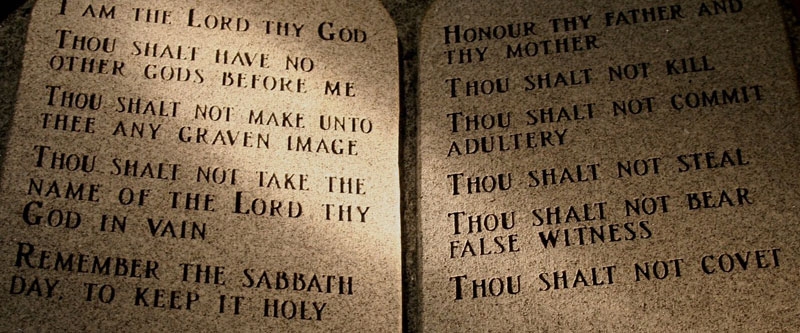
Ten Commandments

“The law sends us to the Gospel that we may be justified; and the Gospel sends us to the law again to inquire what is our duty as those who are justified.”[1]

Recently the topic of the relationship between the Law and the Christian has been occupying a significant amount of my thoughts. That is for two main reasons: 1. I read Charles Leiter’s book The Law of Christ; and, 2. I am preaching through the book of Romans. Why have these things made me consider God’s Law?

First, Charles Leiter’s book is antinomian. That does not mean he is unconcerned with holiness or urging Christians to a righteous life. It is antinomian because Leiter dismisses God’s Law. His basic premise is that the Law (ceremonial, civil, and moral) is abrogated and serves only as an example for the new covenant Christian, unless explicitly repeated in the New Testament. To be renewed by the Holy Spirit, argues Leiter, means the heart is changed and there is a desire to imitate Christ. Therefore the Law is no longer needed. That book forced me to think about the abiding use of the Law from the perspective of someone who would remove it.

Second, preaching through Romans makes me think about the Law, but for a very different reason. Paul is constantly talking about the law. Romans has been divided into 433 verses. 51 of those, or 12% of the verses, mention the word “law”. Sixty-six of those 78 mentions are in the first seven chapters. Of those 51 verses which mention the Law, 41 appear in the first seven chapters. There are 186 verses in those chapters, which means that 22% of the verses in the first seven chapters of Romans use the word “law”. That is a major theme. But in this book, the Law is not being cancelled. Paul is helping the Christian think of the right use of the Law in his life. The Law cannot be used unto salvation, but salvation encourages a right use of the Law.

All of these things have caused me to be refreshed by the Biblical teaching that the free offer of the gospel does not negate the Law’s usefulness for the Christian. There are many Scriptural references to support this way of thinking:

John 14:15 “If you love me, you will keep my commandments.”

Romans 3:31 “Do we then overthrow the law by this faith? By no means! On the contrary, we uphold the law.”

Romans 8:7 “For the mind that is set on the flesh is hostile to God, for it does not submit to God’s law; indeed, it cannot.”

1 John 3:4 “Everyone who makes a practice of sinning also practices lawlessness; sin is lawlessness.”

Texts like these have formed the foundation for the protestant Christian’s belief in the abiding value of God’s Law. The universal nature of this acceptance can be seen in the theological documents that were formulated throughout the Protestant Reformation.

The Sixteenth Century

The Heidelberg Catechism was published in 1563, written primarily by Zacharias Ursinus. It quickly came to be viewed as the best summation of the teachings of reformed Christianity and continues to be used and loved in many Reformed denominations. In Q. 3, the catechism establishes the Law as a convicting agent: “From where do you know your sins and misery? From the law of God.” It is commonly accepted that the Law functions in this way, but the catechism has more to say. It also describes life after the new birth, when man is renewed by the Holy Spirit. This life is the forgiven life, when man is pardoned for sin and declared righteous by faith in Christ. Describing that time, Q. 90 says, “What is the coming to life of the new nature? It is a heartfelt joy in God through Christ, and a love and delight to live according to the will of God in all good works.” And so as to make no mistake about the nature of these good works, the Catechism gives a clarifying definition in Q. 91: “But what are good works? Only those which are done out of true faith, in accordance with the law of God, and to his glory, and not those based on our own opinion or on precepts of men (Italics mine).” In the Heidelberg, the doing of good works which is part of the coming to life of the new nature, is defined by living in obedience to God’s Law.

At about the same time as the Heidelberg Catechism was published, another Confession, the Second Helvetic Confession was published in Zurich. It was authored by Heinrich Bullinger first for his personal use, but then letter as a summary of the teaching of the Reformed Churches in Zurich and beyond in 1566. This confession deals with the law in Chapter XII, “Of the Law of God”. There it says,

“HOW FAR THE LAW IS ABROGATED. The law of God is therefore abrogated to the extent that it no longer condemns us, nor works wrath in us. For we are under grace and not under the law. Moreover, Christ has fulfilled all the figures of the law. Hence, with the coming of the body, the shadows ceased, so that in Christ we now have the truth and all fulness. But yet we do not on that account contemptuously reject the law. For we remember the words of the Lord when he said: “I have not come to abolish the law and the prophets but to fulfil them” (Matt. 5:17). We know that in the law is delivered to us the patterns of virtues and vices. We know that the written law when explained by the Gospel is useful to the Church, and that therefore its reading is not to be banished from the Church. For although Moses’ face was covered with a veil, yet the apostle says that the veil has been taken away and abolished by Christ.”

In other words, the law is not given to justify a man in the sight of God, but rather to show to Him God’s definition of good and evil. The aim is that the man who trusts in Christ alone for salvation rightly understands the law as not causing his salvation, but as an explanation of the good a man should do and the evil he should leave off doing in light of that salvation.

The Seventeenth Century

The Westminster Confession of Faith (1647), The Savoy Declaration (1658), and the London Baptist Confession of 1689 are all 17th century theological summaries. The Westminster Confession of Faith forms the foundation for the latter two. The reason for including their mention is to show the broad agreement in Reformed churches on the issue of the Law. This agreement can be seen in that the Savoy and London Baptist both leave the language they borrow from the Westminster Confession on this subject unchanged:

“6 Although true believers be not under the law, as a covenant of works, to be thereby justified, or condemned; yet is it of great use to them, as well as to others; in that, as a rule of life informing them of the will of God, and their duty, it directs and binds them to walk accordingly; discovering also the sinful pollutions of their nature, hearts, and lives; so as, examining themselves thereby, they may come to further conviction of, humiliation for, and hatred against sin, together with a clearer sight of the need they have of Christ, and the perfection of his obedience. It is likewise of use to the regenerate, to restrain their corruptions, in that it forbids sin: and the threatenings of it serve to show what even their sins deserve; and what afflictions, in this life, they may expect for them, although freed from the curse thereof threatened in the law. The promises of it, in like manner, show them God’s approbation of obedience, and what blessings they may expect upon the performance thereof: although not as due to them by the law as a covenant of works. So as, a man’s doing good, and refraining from evil, because the law encourageth to the one, and deterreth from the other, is no evidence of his being under the law; and, not under grace.

7 Neither are the forementioned uses of the law contrary to the grace of the gospel, but do sweetly comply with it; the Spirit of Christ subduing and enabling the will of man to do that freely, and cheerfully, which the will of God, revealed in the law, requireth to be done.”

In essence the Confession of Faith mirrors Romans in saying that the Law has no use leading up to man’s justification. To affirm law keeping as part of being pardoned and declared righteous would be to live under a Covenant of Works again. The Confession says that is not possible. Man comes to God by His grace, through faith in Jesus Christ only. However, the freedom Christ purchases for His people is not some moral autonomy. God defines a “rule of life” and defines good and evil. This definition is found in His Law. That is why Jesus said, “Do not think that I have come to abolish the Law or the Prophets; I have not come to abolish them but to fulfill them.” (Matt. 5:17). Those who are redeemed make it their delight to walk in these unchanged ways.

Conclusions

So is it right to say the Law of God has no further use? Certainly not. And I give the following reasons:

  1. The Bible does not teach such a thing, but rather shows the inadequacy of the Law unto salvation, but the benefit of the Law for the one saved by grace through faith only;
  2. The Reformed churches of many stripes and places all taught that the Law leads a man to Christ for salvation and afterwards is a guide for thankful, holy living;
  3. Though it is right to claim the heart of the Christian is made new and that he desires to live as Jesus did, it is impossible to separate the law out from that way of living. Even if imitation of Christ was the objective, Christ obeyed the Law perfectly. To imitate Christ is to live in obedience to the Law;
  4. A person who lays aside the Law rarely lives a life of greater dedication to Christ. It is usually done to allow a behavior that is prohibited under the law.

The Law of God is man’s friend if he is in Christ. It is not his master, and it cannot condemn him. But it does help as a good friend does. It directs him away from the things of the flesh because when he lives this way he is hostile to God (Romans 8:7). In that state he will not submit to God’s Law. Instead the Law informs him of God’s definitions of what is good and evil. And it helps him to see just how love for God in Christ should be expressed.

Samuel Bolton was right: “The law sends us to the Gospel that we may be justified; and the Gospel sends us to the law again to inquire what is our duty as those who are justified.”

[1] Samuel Bolton, The True Bounds of Christian Freedom (London: Banner of Truth, 1964) 76, 71, quoted in Charles Leiter, The Law of Christ(Hannibal, Missouri: Grand Ministries Press, 2012) 219.

Church History Snippet – Constantine V

Constantine V was born in the fall of 718 and died in 775. He  assumed formal responsibilities of governing the Byzantine empire as a co-regent of sorts in the 730s. He became the sole ruler of Byzantium in 740 when his father died. Much of Constantine V’s reign is remembered for his involvement in the iconoclastic controversy begun by his father Leo III in 726. The early years of his reign were preoccupied with weathering his brother-in-law Artavasdus’ attempts to dethrone him. However, in 752 that he did pick up where his father left off.  and did so from a more theological and less pragmatic angle.

Constantine approached whether images of Christ are legitimate for the Christian from a Christological perspective. It is ironic in that John of Damascus uses the same doctrine to justify icons and images. However, though they share the same doctrine, their conclusions are far apart. Whereas John argues that because Christ is truly man His human nature may be drawn or sculpted, Constantine argues the opposite. In light of the union of Christ’s human and divine natures in the one person Constantine argues that “the depiction of the prosopon (or hypostasis) which came into existence as the result of the union of the two natures cannot be accomplished, since of necessity this would involve the circumscription of the immaterial, divine nature.”[1] In other words, because of the union between Christ’s human and divine natures you cannot represent one without the other.

Constantine is reaching back to the fourth ecumenical Council of Chalcedon of 451 which declared the human and divine natures of Christ to exist without confusion or separation. At this point Constantine builds on his father’s initial second commandment argument by showing its relation to the orthodox articulation of the definition of Christ at Chalcedon. And with the iconoclast position in the ascendency, Constantine looks to formalize and bolster it with the approval of the church, which he does by calling the Council of Hiereia in 754.

[1] Stephen Gero, Byzantine Iconoclasm During the Reign of Constantine V (Louvain: Secretariat du Corpus SCO, 1977), 41.

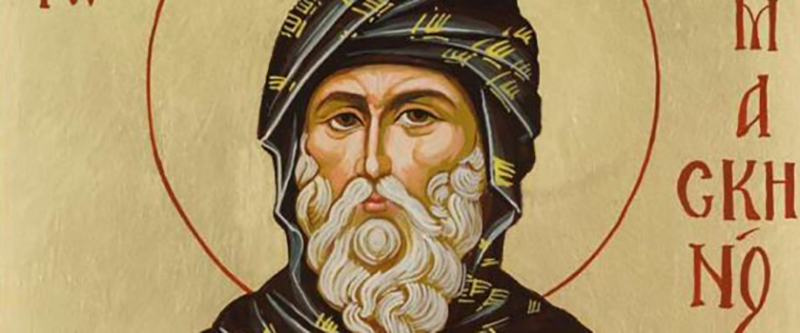
Church History Snippet – St. John of Damascus

This post is not meant to be a complete summary of all that St. John of Damascus wrote and did. It is simply looking at his contribution to the 8th century controversy surrounding iconoclasm, or the destruction of images of God in any persons of the Trinity. Last Church History Snippet looked at Leo III who initiated the formal controversy around these kinds of images in Byzantium, though previous informal disagreements and discussions on this subject certainly existed.

John of Damascus was born in 675 and did not reside in the Byzantine empire. Instead he was a subject of a Muslim Caliph in Damascus. He became a monk in 706 and moved to Jerusalem. In response to Leo’s policy of iconoclasm,  John writes three treatises on divine images. The first one is published in 726, almost immediately after the developments in Constantinople become known. The second, written around 730, and the third written before 750, copy extensively from his first treatise. In his three works, John argues for the proper use of images from eight basic groupings. Their critique is included:

    1. Because Christ took on human flesh, He may be depicted. Objection: Borrowing from the argument David VanDrunen makes in his article “Pictures of Jesus and the Sovereignty of Divine Revelation“,  it is certainly within God’s right to depict himself according to His own perfect wisdom. However, God revealing Himself, and man making a representation of His from his own imagination are two very different things.
    2. The word “veneration” has multiple applications, and can be given to a variety of objects. Objection: Is it possible John of Damascus is the first person to promote nuance? That is not a serious question, but beware of those who adjust definitions and make clear meanings of words confusing to justify their practice.
    3. Veneration given to an image is actually offered to the person or object it represents. Objection: Even if this statement is true, the Bible commands God’s people not to worship Him in the ways of the pagans who worship their gods through images (Cf. Deuteronomy 12:4).
    4. Objecting to icons and images is to adopt the error of the Manichees. Objection: Although it is a clever strategy to associate your theological opponents with heretical views, John of Damascus does not accurately represent the view of the iconoclasts who did not hold that the material is bad but the spiritual is good.
    5. The church has used images in the past, and this tradition justifies their continued use. Objection: Leo III appealed to the second commandment for his iconoclastic policy. The Word of God is the standard of right theology and practice and cannot be overridden by appeals to previous practice. This statement does not even acknowledge that church tradition could be incorrect. Using this logic, there could never have been a Protestant Reformation.
    6. It is inevitable to form a picture of Christ in your mind so you can make images. Objection: Just because it is difficult to resist sin, or even if sin is inevitable, that does not justify continuing to walk in it.
    7. Old Testament Israel was prone to idolatry through graven images, but that is not the cases in the New Testament Church. Objection: I hardly think this needs comment. Man is just as prone to make idols today as he was 3,000 years ago. It is simply wishfully naive to suggest otherwise.
    8. Since God commanded representations of the world to be made in the construction of the Tabernacle, therefore representations of the Son while He is in that same world are acceptable too. Objection: That is true in so far as the question is about making representations of objects that are not the human nature of the 2nd person of the Trinity. However, as soon as you introduce the divine person, the question is different, because God was not represented in the artwork of the tabernacle.

The objections which are included notwithstanding, John of Damascus continues to be a force in the discussion of the proriety of images of Jesus. His arguments, or parts of them, have more or less been adopted by proponents of images of Jesus from the time he made them even until today.

Part 7 » The Christian’s Relationship to the Civil Government: Conclusion

“God has promoted kings, that they may promote justice. As they have a sword in their hand, to signify their power; so they have a scepter, an emblem of justice.” (Thomas Watson, The Ten Commandments, p. 123)

Last installment summarized the reformed, confessional stances on obedience to the civil magistrate. And I want to focus in, by way of conclusion, on a concept that all the confessions had, although they describe it in various ways.

The Heidelberg Catechism calls Christian to honor the “good instruction” of the magistrate. The Second Helvetic confession demands obedience to “just and fair commands”. The Westminster Larger Catechism says the magistrate sins when it uses its authority in an “unlawful” and “unjust” way. The point of all of them is that there are limits to the authority of the magistrate. Therefore, it is not necessary to obey the magistrate when he strays outside of his lane.

This statement is not controversial when it comes to others in authority. If I seek, because I am a father to my children, think I can command all children it should come as no surprise that those outside my family will not listen to me in the same way. If an elder from a Presbyterian Church in America congregation asserts himself at an Orthodox Presbyterian Church’s meeting, he will be ruled out of order. If the president of the United States issues orders for the Prime Minister of England, he will be ignored. And so it is for citizens. When a government takes authority that does not belong to it, Christians are right to ignore it. The civil magistrate is not god and does not have limitless powers.

There have been some examples of a public reprimand for government officials taking more authority than they have. President Biden’s administration ordered that all businesses with more than 100 employees require COVID vaccination or regular testing. The Supreme Court ruled that “Although Congress has indisputably given OSHA the power to regulate occupational dangers, it has not given that agency the power to regulate public health more broadly.”[1] In other words, the government took for itself power that had not been delegated to them. It is neither a “good instruction,” “just and fair” command, or lawful. A company would have been wrong to submit to such an order from the civil magistrate. Herein is the summary of this series.

The Christian is not called to a blind submission to all decrees from the civil magistrate. There are obvious exceptions. When the government commands a sin, the Christian is not to obey. But in the same way, the Christian is not required to yield obedience to unlawful commands. That is not an endorsement of violence and uprisings. It is simply saying that in the face of rapidly expanding unlawful powers being seized by the government, the Christian may quietly refuse an unlawful command and must be willing to suffer the consequences if they do.

[1] https://www.cnbc.com/2022/01/13/supreme-court-ruling-biden-covid-vaccine-mandates.html

Part 5 » The Christian’s Relationship to the Civil Government: The Limits of Power (Part II)

Conflict

“A power ethical, politic, or moral, to oppress, is not from God, and is not a power, but a licentious deviation of a power, and is no more from God, but from sinful nature, and the old serpent.”
Samuel Rutherford, A Christian Manifesto

Last installment looked at the limits of different authorities, all of which God has instituted to serve Him in the world He created. Before moving on to the confessional statements about authority, specifically laid out in the fifth commandment, I want to revisit these three limitations by way of quick review, and add two additional thoughts.

In the limitations drawn out so far, this series outlined three specific ways the government’s authority is naturally limited. The civil government is limited first by its national borders. That seems fairly obvious. Second, they may not treat their citizens as their own property. Tyranny is men with a derived authority, acting as if they hold that authority as their possession. Tyranny itself is usually rejected, but the response is where the waters get muddy. More on that later. Third, governments must themselves be subject to the laws of their own nation.

In this article I want to add two more limits to lawful authority, specifically as it applies to the civil government. The fourth limit is that government is to act honestly with its citizens. It may not prosecute based on bearing false witness, neither may they use false pretenses to justify powers they would not usually hold. The state must prosecute and legislate honestly. Just to address the elephant in the room here, the next paragraph is not going to be that COVID is a hoax. But I am willing to say that a 2-year state of emergency based on an illness with a less than 1% mortality rate is not honest. These claims no longer serve as a justification for sweeping powers that certain governments want to appropriate for themselves: powers that control private business, medical rights, and even ecclesiastical matters. And when an authority uses dishonesty to expand its powers, they are working outside of the limits of the authority which has been entrusted to them.

The fifth limit is that government may not assume authority entrusted to others. That means the civil magistrate has no authority over the business of the church or family. Applying that principle in church and/or family is often easier and clearer. For example, the church is only free to proclaim what God’s word has plainly said, or what can be derived from it by good and necessary consequence. It may not enter into formal discipline for matters of conscience, but only clear, unrepentant violations of God’s commandments. When the church does either of these things it exceeds the limits of the authority entrusted to it. In the same way, fathers may not administer the sacraments to their families in their homes or excommunicate their children from the church. Ironically, within the Christian community when church and father exceeds the limits of their authority, there is a large outcry in the church. Justifiably so. Why not when the same thing is done by the civil magistrate?

Some may object to this and point to cases where the civil magistrate has rightly addressed fraud in the church or abuse in the home. But to think carefully through those examples, it is plain that when a church commits fraud, it is operating unlawfully in its ecclesiastical authority. Or when a husband abuses his wife or children, he is acting unlawfully, which moves beyond the boundaries of his authority as God has given it. Returning to the realm of the civil magistrate, that means the government is in no way to interfere with anything that rightly falls under the authority of the church and/or family. That means no control over any part of religious worship as was recently seen in COVID measures in several states in our Union, most notable California. That means no right to mandatory government education as is the case in several European nations. That means a respect for bodily autonomy. The authority of the civil magistrate has limits, and these should be respected.

By way of summary, let me just enumerate the five limits described above. The government is limited in its use of power in the following ways:

    1. The authority of any civil magistrate does not extend beyond its national borders. That would be a violation of the 8th commandment;
    2. Tyranny is not within the proper purview of government authority. Its citizens are not its property. To treat them as such would be a violation of the 1st and 8th commandments;
    3. Government must themselves operate under the rules and laws of their nation. That would be a violation of the 5th commandment;
    4. Falsehood and propaganda cannot be used as a means to justify authority that would otherwise be unlawful. That would be a violation of the 9th commandment;
    5. The magistrate may not encroach on authority given by God to another institution. That would be a violation of the 5th commandment.

The main point is that, as a servant of God appointed for the good of its citizens (Rom. 13:4), the Moral Law of God, summarized in the Ten Commandments also applies to the government. Its authority is exercised within the limits prescribed by God and the good laws of the commonwealth it governs.

Everything up to this point is to establish that the civil magistrate may overstep its rightful bounds. When other authorities like church and family do so, there is a reasonable expectation of response. And that should not be different in the case of the government either. The question that is so challenging is, what is that response? How does a Christian respond in a Christlike manner when the civil magistrate exceeds the limits of its powers. These questions will be addressed in our next installment.

Part 2 » The Christian’s Relationship with the Government: The Source of Authority

“My travail is that both princes and subjects obey God. Think not, Madam, that wrong is done you, when you are willed to be subject to God.”[1]

There is much to consider when it comes to the power and authority of the government. Especially in western nations, there is consternation among Christians over recent mandates and requirements coming from the civil magistrate. As a result, there has been disagreement in churches and denominations about the extent of authority the magistrate may exercise. And then there is John Knox. Last article he is quoted as advocating for disobedience, even violent opposition to a civil magistrate who exceeds his bounds. In the quote above Knox is speaking to his queen, Mary, Queen of Scots. This time he asserts the limits of her power: she also is to be subject to God. Before there is too much excitement (either positive or negative) about these quotes, there are a series of questions that have to be answered. Before the Christian can affirm or deny Knox’s claims, there must be a clear and biblical understanding of the role and function of government. These questions and their answers make up the substance of this series of articles. The first question to be considered is, “What is the source of the civil government’s power?”

Chapter 23 of the Westminster Confession of Faith deals with government and is entitled “Of the Civil Magistrate”. The biblical texts regarding the establishment of the governing authorities cited in this confession are 1 Peter 2:13-14 and Romans 13:1-4. Reserving consideration only for the latter, in the opening verse of Romans 13 Christians are told “there is no authority except from God, and those that exist have been instituted by God.” Christians must allow the significance of those words to sink in. The Bible teaches here that good and bad princes are placed in their positions by God. There is no authority except from God, and those in authority are placed there by Him. Humanly speaking, rulers may assume power in a variety of ways. Monarchies and emperors do so by birth,  nations may conquer through war, deceitful men may claim power through intrigue and betrayal, and in democracies governments are chosen through the voting process. But behind all those secondary human causes sits God’s singular and divine providence. God decrees, and then carries it out by governing all His creatures and all their actions (see Westminster Shorter Catechism #11).

God’s will is done in the world, also in times when evil seems to have the upper hand. That was the case in Joseph’s life and he recognized it as such. In Gen 50:20 he tells his brothers: “You meant evil against me, but God meant it for good.” In that moment, Joseph recognizes that things appear differently to man than God. Man only has part of the picture and it can seem like evil will prevail. But God, seeing the entirety of His plan, accomplishes his will through secondary causes. When it comes to the governance of the societies of this world, He uses the civil magistrate. God may work through godly princes, but his plan is also accomplished when the wicked rule. Job understood that all things come from God’s hand: “Shall we receive good from God, and shall we not receive evil?” (Cf. Job 2:10). When Satan entered Judas Iscariot’s heart and convinced him to betray Christ, that evil plan resulted in the final victory over sin and death. Those moments are not accidents which God did not foresee. So God gives authority to all rulers, whether they are good or evil. Recognizing that truth will eliminate the vast majority of calls for civil disobedience.

However, when the Bible says all governing authorities are instituted and appointed by God (Rom. 13:1-2), it is not saying that all authorities behave in a godly manner. It is simply recognizing government receives its status through God’s providence. Their position is God-ordained, regardless of the personal approval of its citizens when it comes to their political decisions or personality when lawfully made. To say all authority is instituted by God is not saying anything about the right direction or proper boundaries to the government’s power. What is the civil magistrate to do? For what purpose to it wield its authority? That is a question for the next article.

[1] John Knox, The History of the Reformation in Scotland (Carlisle, PA: The Banner of Truth Trust, 1982), 279.

Part 1 » The Christian’s Relationship with the Government

“If their princes exceed their bounds, Madam, no doubt they may be resisted, even by power. For there is neither greater honour, nor greater obedience, to be given to kings or princes, than God hath commanded to be given unto father and mother.” (1)

The words above were spoken by John Knox as recorded in his History of the Reformation in Scotland. They are an excerpt of a conversation he had with Mary, Queen of Scots. She had asked him to meet with her to discuss his role in the unrest that was sweeping across the land. In response to her accusation that Knox had incited her subject against her, the reformer gives the response quoted above. No doubt, few men had, have, or will have the courage and boldness of John Knox. He was a unique man, set apart by God for a unique time in the history of Scotland and His church. But the question today is not whether anyone is like John Knox, but rather if there is anything to be learned from his answer to queen Mary. In other words, should Christians be more like John Knox?

The words above are of great relevance for today, because the civil magistrate is exercising authority in ways not seen in recent memory in what is called The West. Much of recent mandates and regulations exceed the experience of most Americans. The vast majority of the demands of the government have to do with COVID. Because of the intensity of these government interventions, there is an on-going discussion about whether the government is to be obeyed when it comes to its different mandates. However, this series of articles is not addressing Americans as Americans. It is not addressing any other political entity either. Instead, it is addressing Christians who happen to live in this nation. Can the Christian say “Amen!” to what our brother Knox said to Queen Mary back in 1561?

Certainly, from the Bible there are different instances when Christians disobey their political rulers. Peter and John do so in Acts 4:19-20 where, in response to the command to stop preaching and teaching, Peter says, “Whether it is right in the sight of God to listen to you rather than to God, you must judge, for we cannot but speak of what we have seen and heard.” The debate among Christians is usually not over whether the government can ever be disobeyed. It is more likely to be about what may trigger civil disobedience by Christians.

Some of these questions are extremely complicated. However, in order to be positioned to give a reasonable response, the Christian must be familiar with the Bible’s treatment on the subject of government, or what will be referred to as the Civil Magistrate. Summaries of biblical doctrine can be of great help to today’s church, and for that reason this series will consult with the Westminster Confession of Faith and other confessional statements from the Protestant Reformation. In so doing, this series will address the following questions:

    1. What is the source of the civil magistrate?
    2. What is the power of the civil magistrate?
    3. Are there any limitations to this power?
    4. How does the Christian citizen respond?

God willing, these will be released over the next couple of weeks. The theology of the Christian on government will inform how he responds to its authority. So let us lay a strong foundation and live for the glory of God.

(1) John Knox, The History of the Reformation in Scotland (Carlisle, PA: The Banner of Truth Trust, 1982), 278.

Obedience is not legalism

Ten Commandments

“Now it is evident that no one is justified before God by the law, for ‘The righteous shall live by faith.’” (Galatians 3:11, ESV)

“What shall we say then? Are we to continue in sin that grace may abound? By no means! How can we who died to sin still live in it?” (Romans 6:1-2, ESV)

There are few theological conversations that give me more heartburn than those in which the word “legalism” is tossed around with great liberality. Within the context of a discussion on obedience to God’s law, an objector may claim legalism on the part of the one asserting the need for obedience. It is certainly possible that the person calling for obedience is engaged in legalism, but it is not necessarily so. I’m convinced a right understanding of the meaning of this word will keep me from reaching for my bottle of chewy Tums.

Assuming that in the scenario describe above, the word “legalism” is being used to describe meticulous obedience to God’s law, it is important to begin by saying that meticulous obedience is not legalism. Meticulous obedience can be legalism, but it can also be a glorious expression of love to God for the work of Christ on behalf of the sinner. Jesus himself calls for meticulous obedience to the Lord in His Sermon on the Mount: 

“Therefore whoever relaxes one of the least of these commandments and teaches others to do the same will be called least in the kingdom of heaven, but whoever does them and teaches them will be called great in the kingdom of heaven. (Matthew 5:19) 

Even the least of the commandments should not be relaxed, according the Jesus. That principle is seen in action in many places in the Bible. For example, Adam plunges the whole human race into sin and misery by something as simple as eating a piece of fruit. In Num. 15:32-36, a man is stoned to death for the harmless act of collecting sticks on the Sabbath. Why? Because taking these actions was in direct opposition to the explicit commandment and instruction from God. So a narrow assessment of the duties of a law is not sufficient to indicate legalism. Laws and commandments are by definition narrow, also the ones given by the Lord. So what is legalism?

Using the word “legalism” is valid in one of two scenarios. First, it is when something, anything is added to the doctrine of justification by faith. That was the sin of the Galatian Judaizers. Their claim was that you were saved by faith in Jesus plus observance of the ceremonial laws. Derek Thomas has referred to this addition as the “damnable plus.” This distortion of the gospel adds a human element to the innocence of the Christian. Law keeping plays a contributing role in salvation. But as it says in Gal. 3:11 (above), man is not justified in such a way. Christ’s perfect obedience to all of God’s commandments and His righteousness only, are credited to the believer through faith. Anyone who changes that gospel is a legalist and, according to Paul, should be accursed (Gal. 1:8,9).

Second, it is to assert that an application of God’s word that you find particularly helpful is binding on everyone else. In a sense you are elevating your preference to the same status as God’s Law and in so doing practice idolatry. The bedtime for young Gleason children is 7 p.m., rain or shine, and therefore all others must do the same. Or, perhaps a more contemporary example would be around mask wearing. I think wearing masks is a good idea, so therefore everyone must wear a mask. Or I think mask wearing is a bad idea, therefore no one should wear them. Anyone who differs from me in practice is either sinning (worst case) or lacks the wisdom that I have (still not good). That also is the work of the legalist.

To recognize the right use of the word “legalism” helps give the Christian balance in his use of the word. Law keeping, even detailed law keeping, is not an indication of legalism. As Paul says, “For it is not the hearers of the law who are righteous before God, but the doers of the law who will be justified.” (Rom. 2:13). Or James says, “So also faith by itself, if it does not have works, is dead.” The point is not that law keeping makes you righteous. Rather, when you have been made righteous through Christ, you will desire and be careful to keep His commandments. When charges of legalism are flippantly used to silence calls for obedience, God’s authority is denied and the Christian’s expression of love to his Savior is silenced. If a Christian finds keeping God’s specific commandments a burden, then something has gone wrong. In John 14:15 Jesus says, “If you love me you will keep my commandments.” That is not legalism. Legalism is rule keeping with the hope of earning salvation. It is to load a burden on a brother that God never set on him. But if God has given a commandment, it is incumbent on the Christian to obey it totally, carefully, and perfectly. That is not a burden to the redeemed Christian. In fact it is his delight.